When it comes to Keigo Higashino, I have to admit something first. I’ve loved almost every single book of his that I’ve read. His stories are clever, emotionally layered, and always leave something lingering in your mind long after you finish the last page.
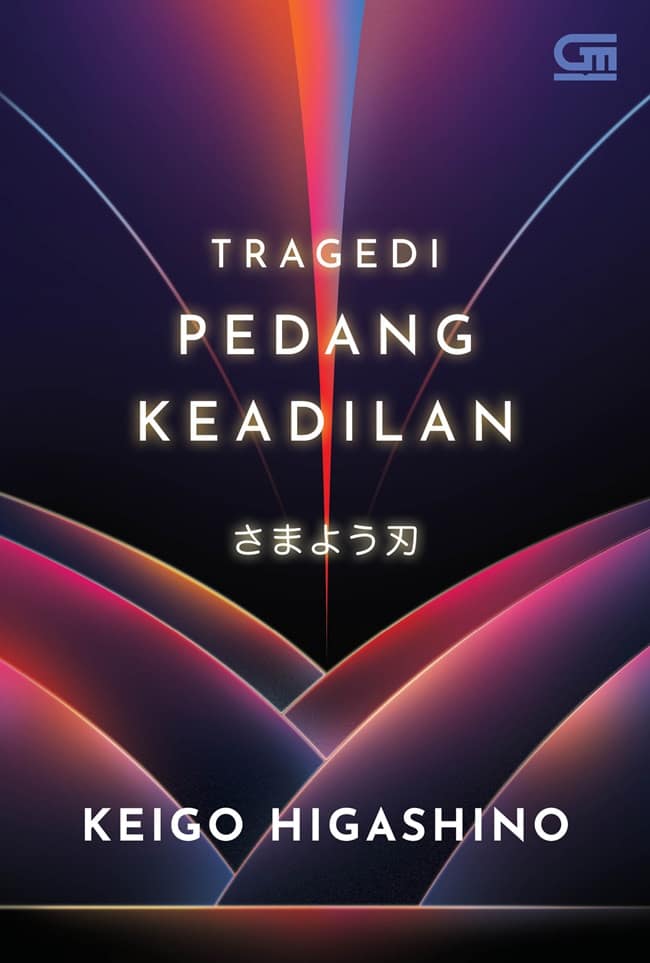
Title: Tragedi Pedang Keadilan/ The Hovering Blade
Author: Keigo Higashino
Genre: Crime Thriller
Rating:  4/5
4/5
But there is one exception.
One book that didn’t just leave an impression. It unsettled me. It drained me. It stayed with me in a way that felt heavy, almost suffocating.
That book is Tragedi Pedang Keadilan. The film adaptation is titled The Hovering Blade, which you can find on streaming platforms.
Before anything else, let me say this clearly: please check the trigger warnings before reading. Even the blurb alone is enough to make your blood boil. The story itself goes much further. This is not a comfortable read. It’s the kind of book that makes you angry, frustrated, and emotionally exhausted all at once.
The story begins with a life already reduced to something fragile. Nagamine Shigeki has been living quietly with his only daughter, Ema, ever since his wife passed away. His world is small, but it still holds meaning. Ema is everything he has left.
Until one summer night, when she goes out to a festival and never comes home. What returns is her body, found in a river. The kind of loss that doesn’t just break you, but empties you.
The police begin their investigation, following procedure, asking questions, building a case. But for Nagamine, everything feels distant and unbearably slow. Grief doesn’t wait for legal processes. It doesn’t care about timelines.
Then, out of nowhere, an anonymous phone call arrives.
It gives him names.
An address.
The kind of information that feels too real to ignore.
Driven by grief that has begun to sharpen into something more dangerous, Nagamine goes to the apartment mentioned. What he finds there doesn’t just break him. It transforms him.
A recording.
Not just evidence, but a brutal documentation of his daughter’s final moments. She was abd*cted, assa*lted, and murd*red by two teenage boys, Kaiji and Atsuya. Watching that video is the moment everything changes. His grief hardens into something cold, something focused.
And in that moment, something inside him shifts permanently.
When one of the perpetrators returns to the apartment, Nagamine is already there.
There are no raised voices.
No hesitation.
Only one decisive act.
He k*lls him.
But that is not the end. It is only the beginning.
Nagamine leaves the city and heads toward Nagano, determined to find the second perpetrator. Before he goes, he writes a long letter to the police. It is both a confession and a declaration. In it, he explains not only what he has done, but why.
He speaks of the law.
Of how the system often fails to properly punish underage offenders.
Of how justice can feel hollow to those who have lost everything.
Because under juvenile law, the perpetrators will likely receive light punishment. Rehabilitation. Protection. A second chance.
And that’s where the story becomes deeply infuriating.
The letter doesn’t remain private. It reaches the media, and soon the entire country knows: a father is hunting down his daughter’s k*llers.
What follows is not just a manhunt, but a moral battlefield.
Along the way, Nagamine encounters people who see him in completely different ways. Some view him as a criminal. Some understand him. Others are caught somewhere in between. Meanwhile, the police race to stop him, not only to prevent another killing, but to preserve the fragile boundary between justice and vengeance. And still, Nagamine keeps moving forward.
Reading this feels like emotional whiplash.
The novel dives into themes that are incredibly difficult to process. It portrays group sexual violence involving teenage girls, carried out in a calculated and horrifying way. The perpetrators record everything, turning the abuse into a weapon. The videos become tools of control, used to threaten the victims into silence. And that silence becomes another layer of violence.
What makes it even more disturbing is what happens afterward.
Some victims end up helping the perpetrators escape. Not because they want to, but because they feel they have no choice. They see themselves as “ruined.” They are terrified that the videos will be exposed, that their families will find out, that they will be judged and shamed.
In that fear, they are manipulated even further. That part is incredibly difficult to read, not just because of what happens, but because it feels painfully real.
And then there’s the issue of the law.
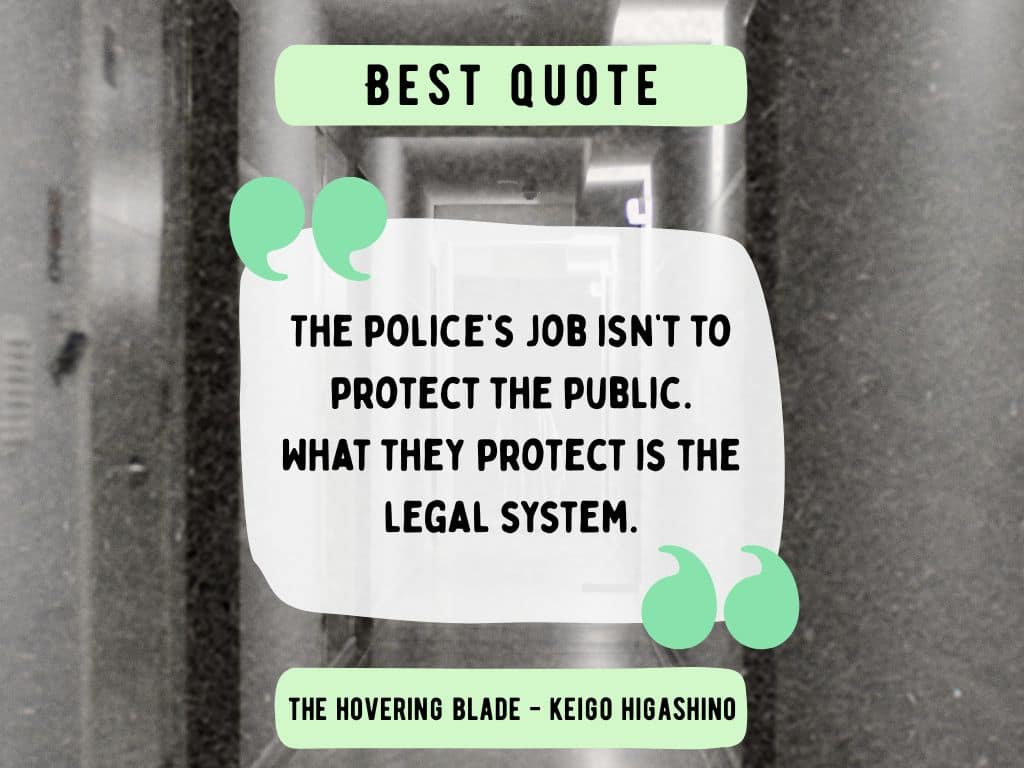
This story highlights the flaws of juvenile justice systems, not just in Japan, but in many countries. The system is designed to protect and rehabilitate minors, but in cases like this, it feels like it protects the perpetrators more than the victims. Their identities are hidden. Their futures remain intact.
But what about the victims? What about the families left behind? That imbalance is what fuels Nagamine’s actions, and honestly, it’s hard not to understand his anger.
I found myself furious. Not just at the perpetrators, but at their parents, who remain in denial and continue to defend their children despite the undeniable evidence. That kind of blind justification feels just as dangerous. Excusing harmful behavior with “they’re just kids” only allows it to grow into something far worse.
The emotional impact of this book is intense. Sadness, anger, disgust, helplessness, all of it comes crashing in from the very beginning until the end. It’s easily the most brutal and mentally exhausting Higashino novel I’ve read. The triggers are heavy: s*xual viol*nce, expl*cit cruelty, and psychological trauma.
And yet… it’s impossible to stop reading. The story is gripping. The pacing, while sometimes slow, builds tension steadily. You follow both Nagamine’s journey and the police investigation, constantly wondering what will happen next.
The climax is powerful and emotionally draining. But the ending?
Deeply unsatisfying.
The remaining perpetrator survives. There is no real sense of justice. No closure. No balance. It feels incomplete, almost deliberately so. Like the story refuses to give you the comfort you’re hoping for. And maybe that’s the point.
Because in reality, justice doesn’t always come. The system doesn’t always work. And sometimes, the people who suffer the most are the ones who are left with nothing but trauma.
Still, I would recommend this book, with caution.
It’s a 17+ read for a reason. It’s disturbing, heavy, and not for sensitive readers. But it’s also powerful, thought-provoking, and unforgettable. It delivers a different kind of reading experience compared to Higashino’s other works. This isn’t just a mystery. It’s an emotional confrontation.
You will feel angry.
You will feel helpless.
You might even feel sick reading parts of it.
But you won’t forget it.
This isn’t just a dark story. It’s a reminder of how dark reality can truly be. Read at your own risk.